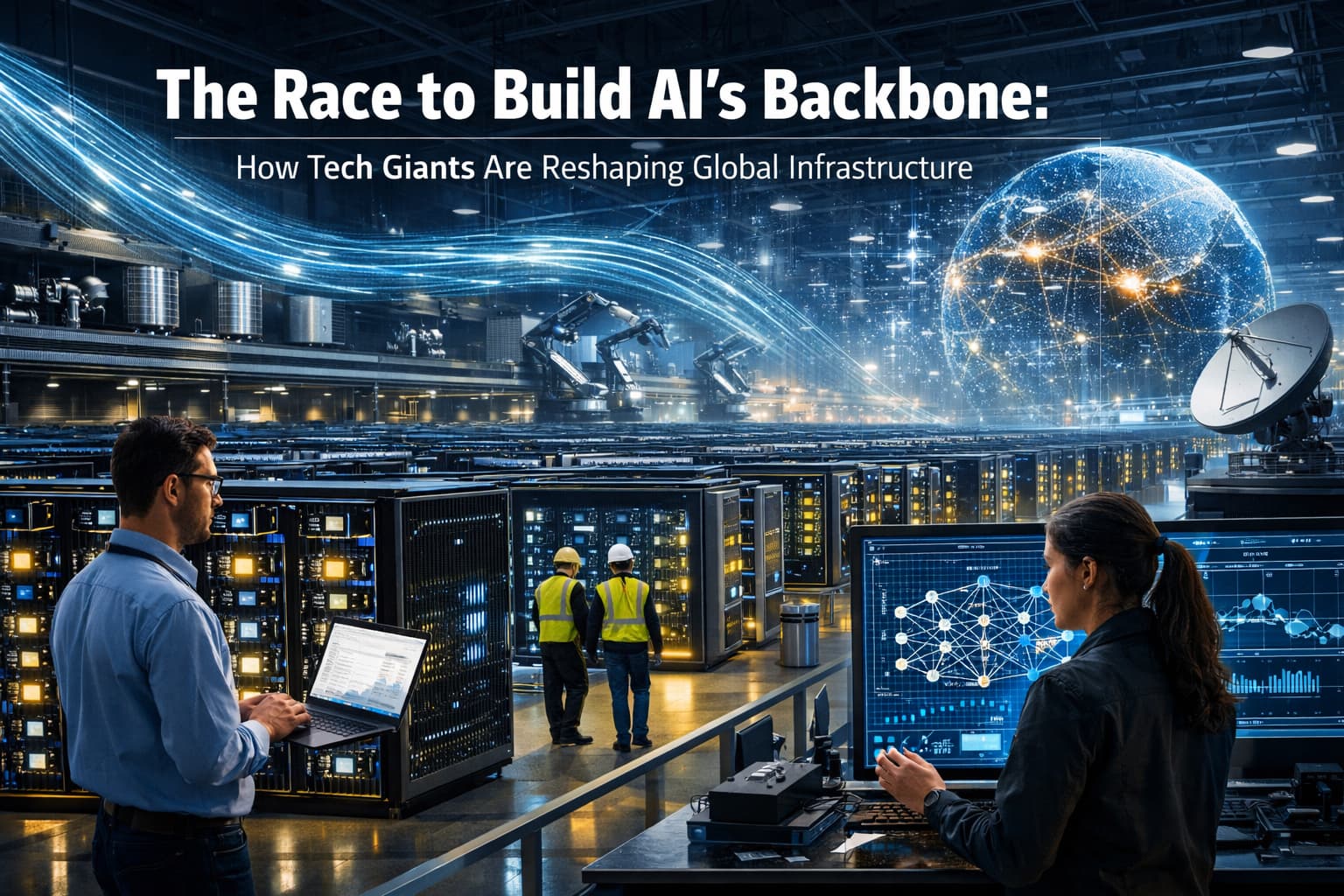
A defining transformation is underway in the technology sector, as the world's most powerful companies commit unprecedented capital to the physical and computational foundations required to sustain artificial intelligence at scale. From hyperscale data centers to proprietary silicon, the infrastructure arms race has moved well beyond theoretical ambition into concrete, multibillion-dollar reality. The players involved — Meta, Oracle, Microsoft, Google, and OpenAI — represent both the demand side and the supply side of an ecosystem that is rapidly restructuring global investment priorities.
What makes this moment historically significant is not merely the volume of spending, but the speed at which commitments are being announced and executed. Organizations that once measured infrastructure expansion in years are now operating on compressed timelines, driven by competitive pressure and the insatiable computational appetite of large language models and multimodal AI systems. Understanding who is building what — and at what scale — has become essential intelligence for executives, investors, and policymakers alike.
Meta's Infrastructure Ambitions
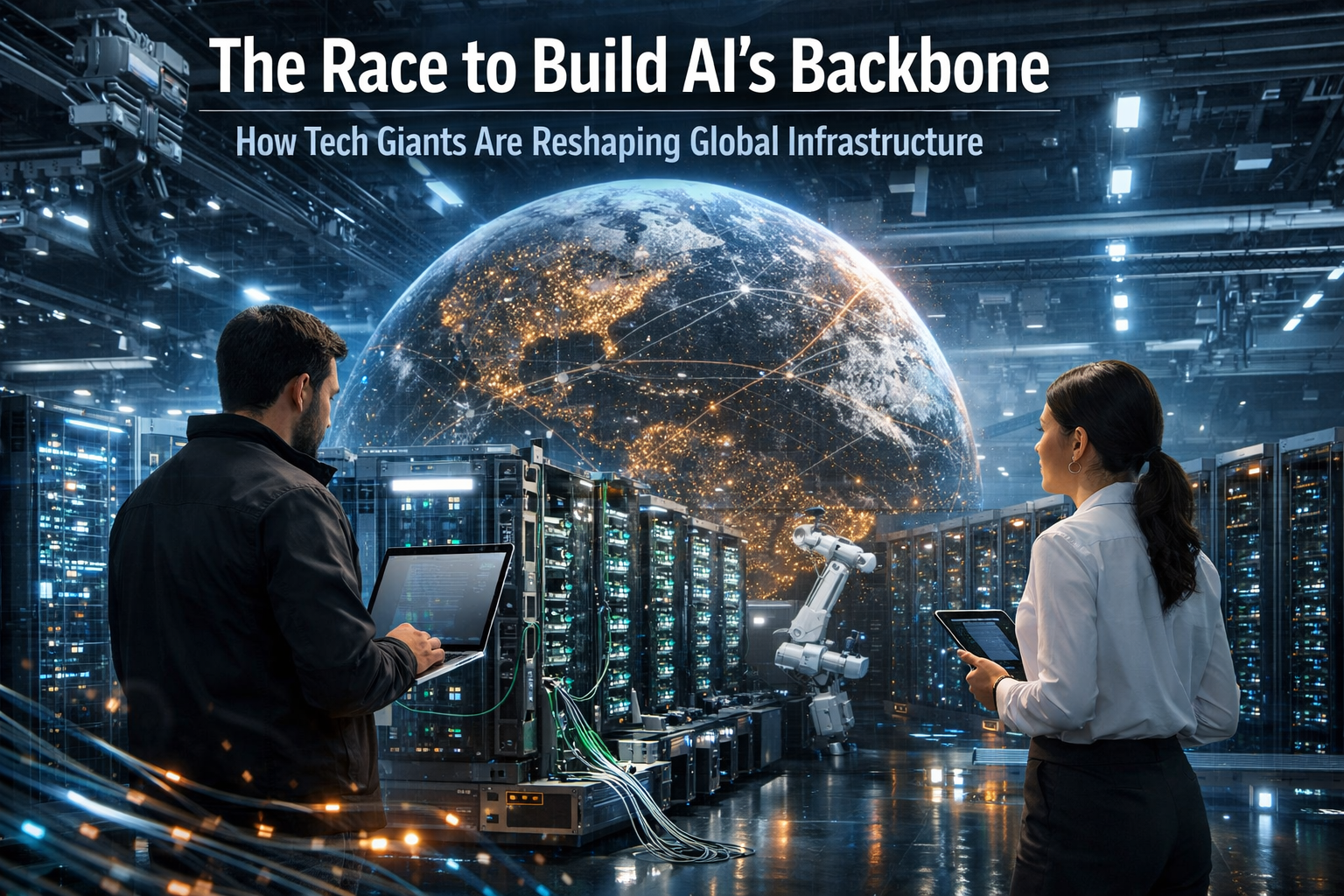
Meta has positioned itself as one of the most aggressive infrastructure investors in the current cycle. The company's commitment to AI infrastructure reflects its strategic determination to compete at the frontier of both research and commercial AI deployment. Meta's data center expansion efforts span multiple continents, with facilities designed specifically to support the computational demands of its open-source model families and internal recommendation systems.
The social media and technology conglomerate has made clear that infrastructure ownership — rather than reliance on third-party cloud providers — is central to its long-term AI strategy. This vertical integration approach gives Meta greater control over latency, cost, and capability, while simultaneously deepening its hardware procurement relationships with leading chip manufacturers.
Oracle's Emergence as a Critical AI Cloud Provider
Oracle has emerged as a somewhat unexpected but increasingly significant force in AI infrastructure. The enterprise software giant has leveraged its existing cloud business to attract major AI workloads, positioning its Oracle Cloud Infrastructure as a preferred environment for training and inference at scale. Its data center footprint has expanded substantially as demand from AI-native companies has surged.
Oracle's strategic partnerships with key AI developers have elevated its standing in a market previously dominated by Amazon Web Services, Microsoft Azure, and Google Cloud. The company's ability to offer dedicated, high-density GPU clusters has proven attractive to organizations seeking alternatives to the hyperscaler giants, giving Oracle a credible seat at the infrastructure table.
Microsoft's Sustained Investment Thesis
Microsoft's infrastructure strategy is inseparable from its deepening relationship with OpenAI. The company has committed to building out the computational capacity required not only to serve its own enterprise AI products but also to power OpenAI's training and deployment operations. This dual mandate has made Microsoft one of the single largest infrastructure investors in the current AI cycle.
Azure's global expansion has accelerated in direct response to AI demand, with new regions and facilities coming online at a pace that reflects both competitive necessity and genuine customer pressure. Microsoft's investment thesis rests on the conviction that enterprise adoption of AI will be sustained and deepening, making today's infrastructure outlays a long-term strategic asset rather than a speculative bet.
Google's Proprietary Hardware Advantage
Google occupies a structurally distinct position in the AI infrastructure landscape, owing to its long-standing investment in proprietary Tensor Processing Units. These custom-designed chips give Google a performance and efficiency advantage for specific AI workloads, reducing its dependence on third-party GPU suppliers while enabling differentiated cloud offerings through Google Cloud.
The company's infrastructure strategy encompasses not only data centers and silicon but also the undersea cable networks and renewable energy agreements that underpin sustainable, globally distributed AI compute. Google's vertically integrated approach — spanning chip design, data center construction, and cloud service delivery — represents one of the most comprehensive infrastructure postures of any organization in the sector.
OpenAI's Capital-Intensive Path to Independence
OpenAI presents a unique case in the infrastructure narrative. As primarily an AI research and product company rather than a traditional infrastructure operator, OpenAI has nonetheless become one of the most consequential drivers of infrastructure investment, both through its partnership with Microsoft and through its own emerging efforts to develop more direct control over compute resources.
The organization's infrastructure dependencies have grown alongside the scale of its models, making compute access a strategic vulnerability that its leadership has publicly acknowledged. OpenAI's pursuit of dedicated infrastructure — whether through partnerships, investments, or direct procurement — reflects a broader industry pattern in which AI capability is increasingly inseparable from infrastructure ownership.
What This Means for the Industry
The aggregate scale of spending across these organizations signals a structural shift in how the technology industry allocates capital. Infrastructure is no longer a supporting function — it is a primary competitive differentiator. Organizations that secure compute capacity today are positioning themselves to train more capable models, serve more customers, and iterate more rapidly than those that cannot.
For decision-makers outside the immediate circle of hyperscalers and frontier AI labs, the implications are equally significant. The consolidation of AI infrastructure among a small number of well-capitalized actors creates both dependency risks and partnership opportunities. As the physical foundations of artificial intelligence continue to take shape, the strategic choices made now will define the competitive landscape for the decade ahead.