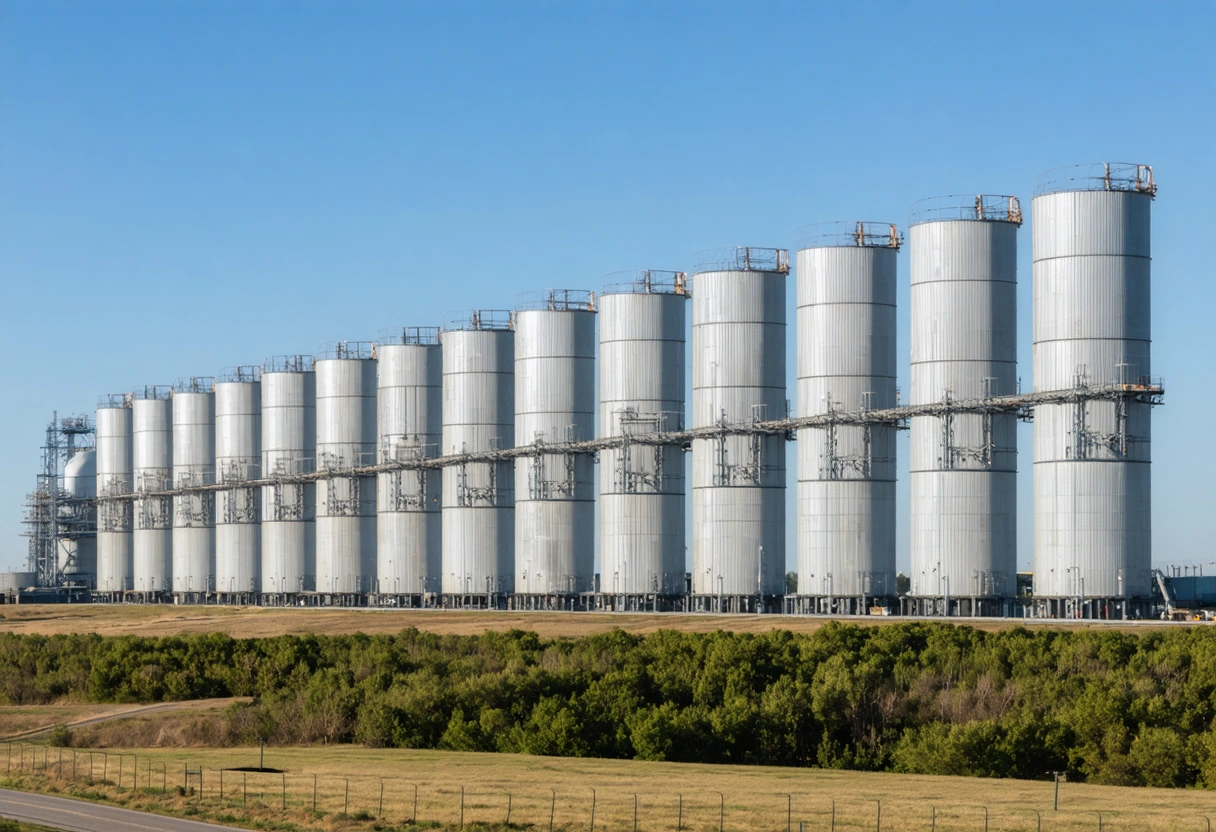
Long before Elon Musk's artificial intelligence company xAI secured any community input, 27 temporary gas turbines were quietly installed at a power plant in Southaven, Mississippi. Since then, residents living within miles of the facility have been subjected to relentless industrial noise — described variously as roaring, high-pitched whining, and sudden explosive pops — operating around the clock to fuel xAI's rapidly expanding AI infrastructure.
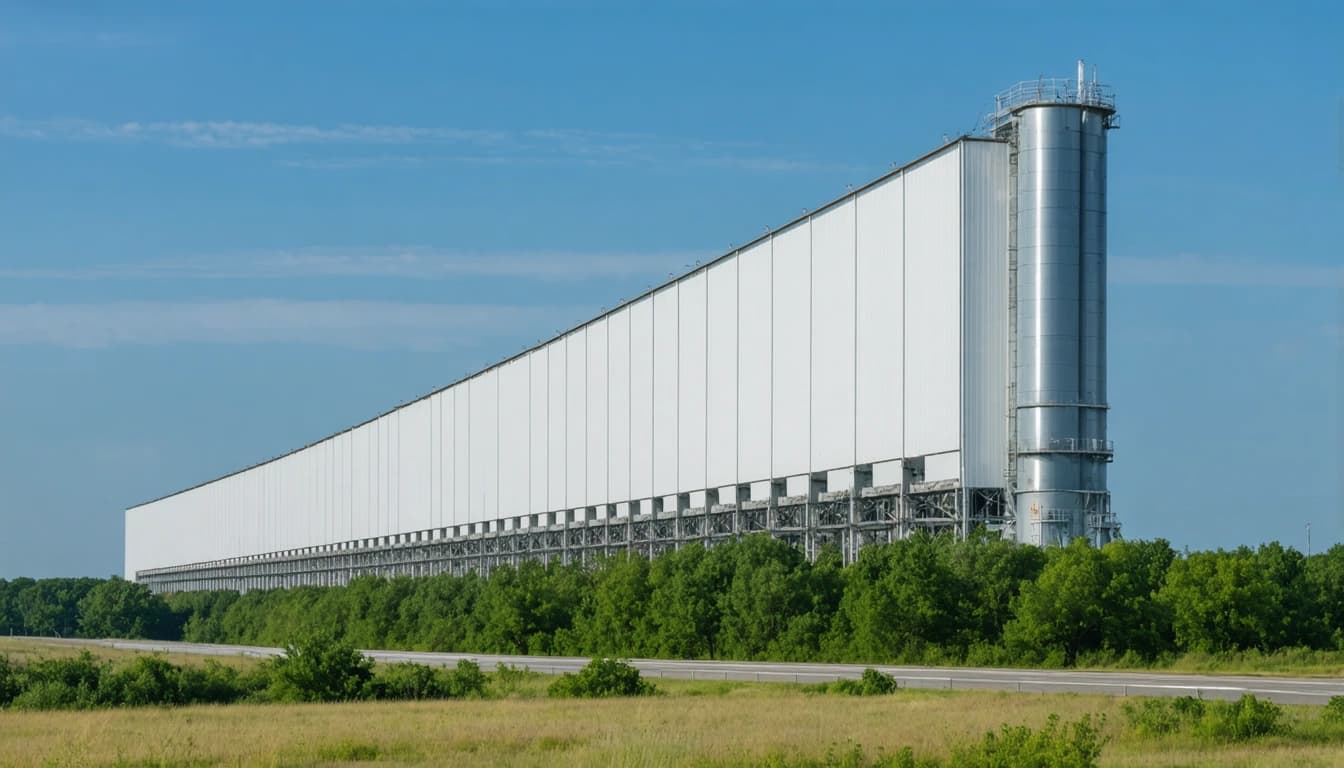
The company eventually responded to mounting complaints by erecting a sound barrier at a reported cost of $7 million. But according to people who live nearby, the barrier has made virtually no difference. Taylor Logsdon, a resident close to the plant, said neighbors have taken to calling it the "Temu sound wall" — a sardonic reference to the Chinese discount e-commerce platform associated with low-quality goods. Logsdon noted the wall has failed to calm even her dogs, which continue to react to sudden booms and shrieks that punctuate the turbines' constant jet engine-like drone. NBC News, which spoke with affected residents in a report published Thursday, found that some describe the unexpected sounds as simply "scary."
A community advocacy organization called the Safe and Sound Coalition has stepped in to document what residents are experiencing. Its website aggregates videos of the noise, independent noise analysis reports, and public records that reveal how little transparency has surrounded xAI's dealings with local officials. Jason Haley, an IT worker who co-founded the group, put the frustration plainly when speaking with NBC News.
"If you knew the noise was going to be an issue, put in a sound wall first. Do some other stuff first before you torture us. That's not that hard of an ask."
Public records requests submitted to the city of Southaven seeking documentation on noise ordinance exemptions or communications about the sound barrier came back empty. A director overseeing planning and development stated the office was not "involved with the noise barrier wall" and had no details to offer. A building department permit clerk similarly confirmed there were no relevant documents to provide. A coalition spokesperson told Ars Technica that "the absence of documentation raises transparency concerns," adding that decisions made without accessible records create "an accountability gap and limit the public's ability to understand how those decisions were evaluated or authorized."
Beyond noise, residents are increasingly worried about what the plant's permanent expansion could mean for their health and environment. xAI is now seeking permits for 41 permanent gas turbines — which it claims will be quieter than the temporary units — while 12-month approval to run the current turbines required no additional permitting. Community flyers distributed by the Safe and Sound Coalition warned that pollutants from the plant could elevate risks of asthma, heart attacks, stroke, and cancer. The flyers also raised concerns about the city's primary drinking water supply, suggesting wastewater from the facility could introduce toxic chemicals since no nearby graywater recycling plant exists.
One noise analysis shared by the coalition found that the daily sound levels produced by the turbines scored higher on an "annoyance scale" than the noise generated when entire neighborhoods set off New Year's Eve fireworks. A health impact analysis published on behalf of the Southern Environmental Law Center (SELC) went further, using the EPA's COBRA model to project the long-term consequences of running all 41 permanent turbines.
Emissions from running 41 permanent turbines at the Southaven plant "are estimated to result in $30–$44 million per year in health-related damages, including costs from premature deaths, hospital visits, and lost productivity. Over a typical 30-year operating life, these impacts would amount to approximately $588–$862 million in cumulative discounted public-health costs, borne largely by residents of Tennessee and Mississippi."
The same analysis noted that the largest increases in harmful pollutants are expected to be "concentrated in communities that are disproportionately Black, highly socially vulnerable, and have elevated baseline asthma prevalence." This concern echoes earlier protests that erupted when xAI built a massive data center in Memphis, Tennessee, where the company was accused of misleading Black communities about the extent of potential pollution.
Legal pressure is building alongside community protest. Earlier this month, the SELC joined the NAACP in sending xAI a formal notice of intent to sue, arguing that a recently amended EPA rule now requires permits for the temporary turbines. The groups gave xAI 60 days to respond. These same organizations previously threatened legal action over alleged data center pollution in Memphis. There, xAI ultimately secured permits for some of its gas turbines — an outcome many locals called "devastating" — though residents monitoring the site via drone imagery warned that permits covered only 15 of 24 turbines on the property.
Whether federal regulators will step in remains an open question. EPA Administrator Lee Zeldin addressed xAI's turbines directly in a January interview with Fox Business, confirming the agency was coordinating with local officials in Southaven and Shelby County. But rather than hinting at any enforcement review, Zeldin framed the EPA's role in a different light entirely.
"EPA has the power to slow things down; EPA also has the power to speed things up, and that's where the Trump EPA is."
That posture reflects the broader federal directive under President Donald Trump, who has pushed to accelerate permitting for data center construction as part of a national strategy to dominate artificial intelligence development. Permitting for Southaven's permanent turbines could be approved as soon as next month, according to NBC News.
For local government, xAI's presence has been framed almost entirely as an economic windfall. Mississippi Governor Tate Reeves called the purchase of the dormant power plant "the largest private investment in state history." xAI's affiliated company behind the Southaven projects, MZX Tech, donated $1.38 million to the city's police department. Both the plant and a planned data center — which Musk has dubbed "MACROHARDRR" in what appears to be a jab at Microsoft — "are expected to bring in millions of dollars and new jobs," Reeves said.
Southaven Mayor Darren Musselwhite has pushed back on the protests in sharper terms, suggesting on Facebook that at least some demonstrators are motivated purely by opposition to Musk personally. While acknowledging that noise was a "legitimate concern," he wrote that "Southaven is now under attack by all who choose to oppose Elon Musk because of his high-profile political stances." Residents, however, told NBC News that their complaints have nothing to do with politics — with at least one interviewee expressing support for Musk's work with the Department of Government Efficiency. The Safe and Sound Coalition's community flyer offered a sharper characterization of how the project unfolded:
"This project was started behind our backs, with zero community input. Local officials have repeatedly downplayed concerns, spun the facts, and misled residents about the true impacts and the deals made with xAI. Many people only found out after the turbines were up and running."
As for the noise itself, the coalition says a second sound barrier is reportedly under construction and could be finished within the next two months, with engineers now studying "what type of sound barrier would be most effective." The group, however, is not optimistic. A spokesperson told Ars Technica that the coalition remains "skeptical" the new wall will perform any better than the first.
"To our understanding, sound barriers can reduce certain frequencies under controlled conditions, but turbine noise involves low-frequency sounds and tonal components that often reach beyond barriers. The most effective method for reducing industrial noise exposure is typically distance from residential areas, which is not a mitigation option in this scenario given the facility's proximity to homes."
The coalition is calling on xAI to release transparent data supporting any mitigation claims it makes about the new barrier, warning that without independent verification, such promises are meaningless to the people living nearby. The spokesperson added that even if permits for the permanent turbines are approved, the group's work will not stop — it will simply shift toward long-term monitoring, enforcement advocacy, and ensuring residents have access to accurate information about ongoing environmental and health risks.
xAI did not respond to Ars Technica's request for comment, and the company has yet to release the noise analysis it reportedly conducted. The Safe and Sound Coalition's website states plainly what residents believe is at stake: "Our water, air, power grid, utility bills, property values, and health are all at risk. We're already facing toxic pollution and relentless industrial noise. There is no clear oversight, no transparency, and no plan to protect the people living nearby."