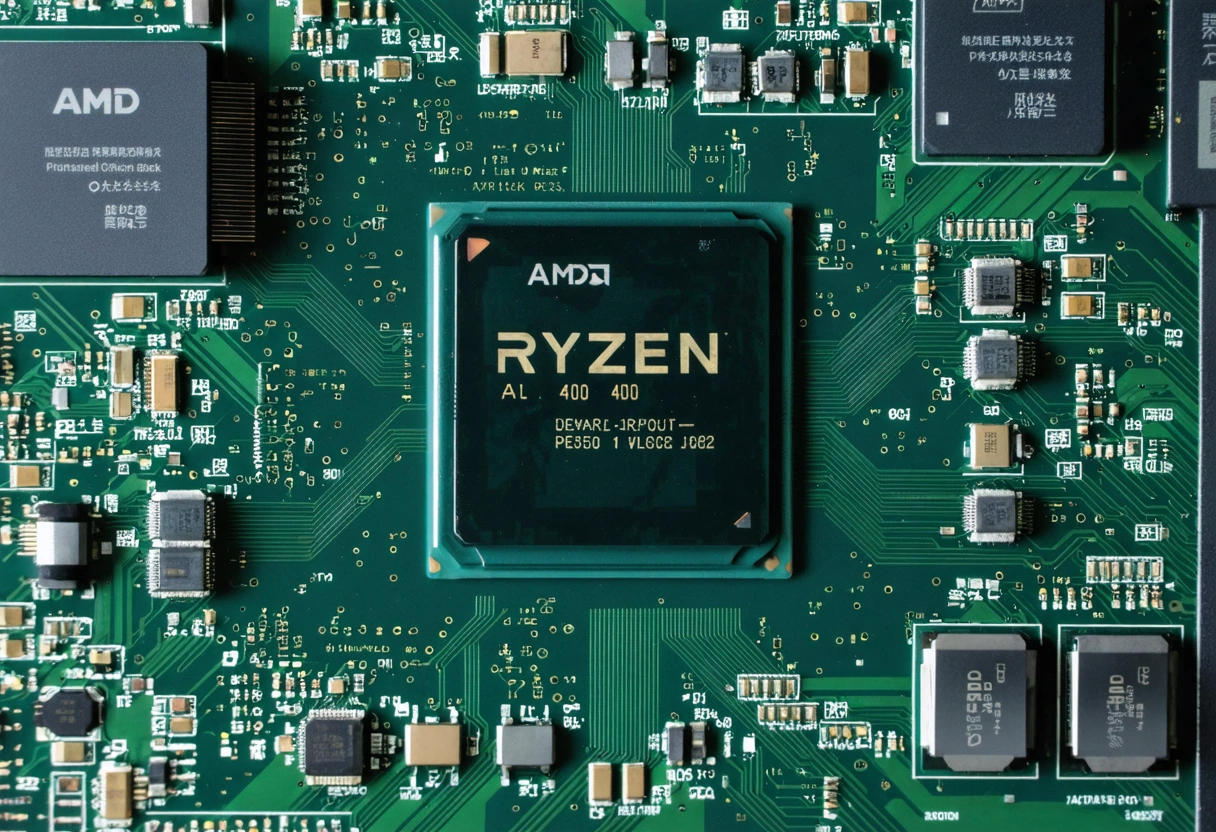
AMD's latest desktop processor announcement doesn't break new ground, but it tells an interesting story about where the PC industry stands in early 2026. The new Ryzen AI 400 desktop CPUs are, at their core, repurposed laptop chips — a familiar strategy AMD has employed with its G-series Ryzen lineup for years. What's notable this time around is what's missing from the equation.
The new chips share the vast majority of their specifications with existing Ryzen AI 300 laptop processors, despite carrying Ryzen AI 400-series branding. The two generations are closely related, with one meaningful distinction: Ryzen AI 400-series laptop parts feature slightly faster
Where AMD is drawing a clear line, however, is at the top of the performance stack. Previous desktop G-series launches brought AMD's highest-tier laptop silicon to the small form factor desktop market, but that's not the case here. The chips announced today cap out at
By comparison, chips like the Ryzen AI 9 HX 375 or HX 370 offer a full
The economics of gaming-focused mini PCs built around socket AM5 processors are particularly difficult right now. These platforms rely on pairs of fast DDR5 memory to unlock their full potential, and DDR5 pricing has climbed sharply over the past year. Building a compelling gaming machine around an integrated desktop GPU is a tough sell in any market environment, but especially this one — the frames-per-second-per-dollar proposition simply doesn't hold up. That reality likely explains why AMD is positioning these chips toward business desktops as their primary target audience.
AMD's initial desktop lineup consists of
Stepping back, the Ryzen AI 400 desktop launch aligns neatly with what AMD signaled at CES earlier this year: measured, incremental updates rather than dramatic leaps forward. That conservative posture isn't entirely surprising given the broader conditions facing the semiconductor industry. Manufacturing capacity at TSMC remains fiercely contested, with chipmakers across the industry competing for the same production slots. Add ongoing RAM and storage supply constraints to the picture, and the result is an environment that simply doesn't favor bold hardware pivots.
Whether AMD revisits this lineup with higher-performance options later in the year remains to be seen. For now, the Ryzen AI 400 desktop parts represent a pragmatic, if unspectacular, step forward — one calibrated to the realities of a market under considerable supply chain pressure.