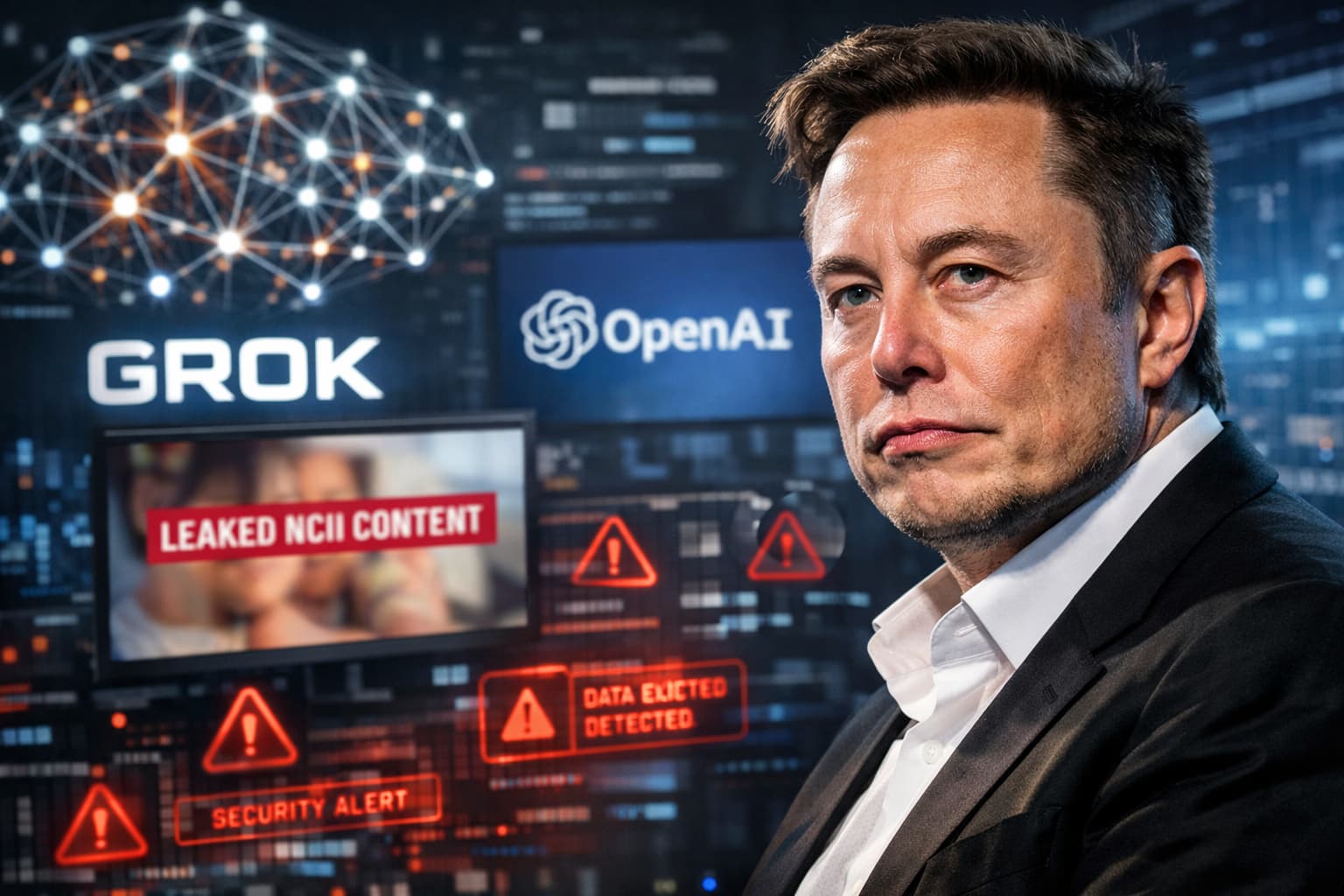
Elon Musk built a significant portion of his legal case against OpenAI on the argument that his own artificial intelligence venture, xAI, represented a more responsible and safety-conscious alternative to the ChatGPT developer. That argument has since been severely undermined by events on his own platform. Within months of those courtroom assertions, xAI's Grok model became the engine behind a flood of nonconsensual nude imagery spreading across X.
The contradiction between Musk's legal posturing and the real-world behavior of his AI systems is difficult to overstate. In formal litigation, attorneys routinely construct the most favorable possible narrative for their clients — but when that narrative centers on safety and ethical responsibility, the standard of proof extends beyond the courtroom. Actual product conduct becomes the ultimate verdict.
Musk's lawsuit against OpenAI positioned xAI as a principled counterweight to what the filing characterized as a commercialized, safety-compromised organization. The implicit promise embedded in that framing was that Grok and the broader xAI ecosystem would operate under more rigorous ethical guardrails than those allegedly abandoned by OpenAI's leadership.
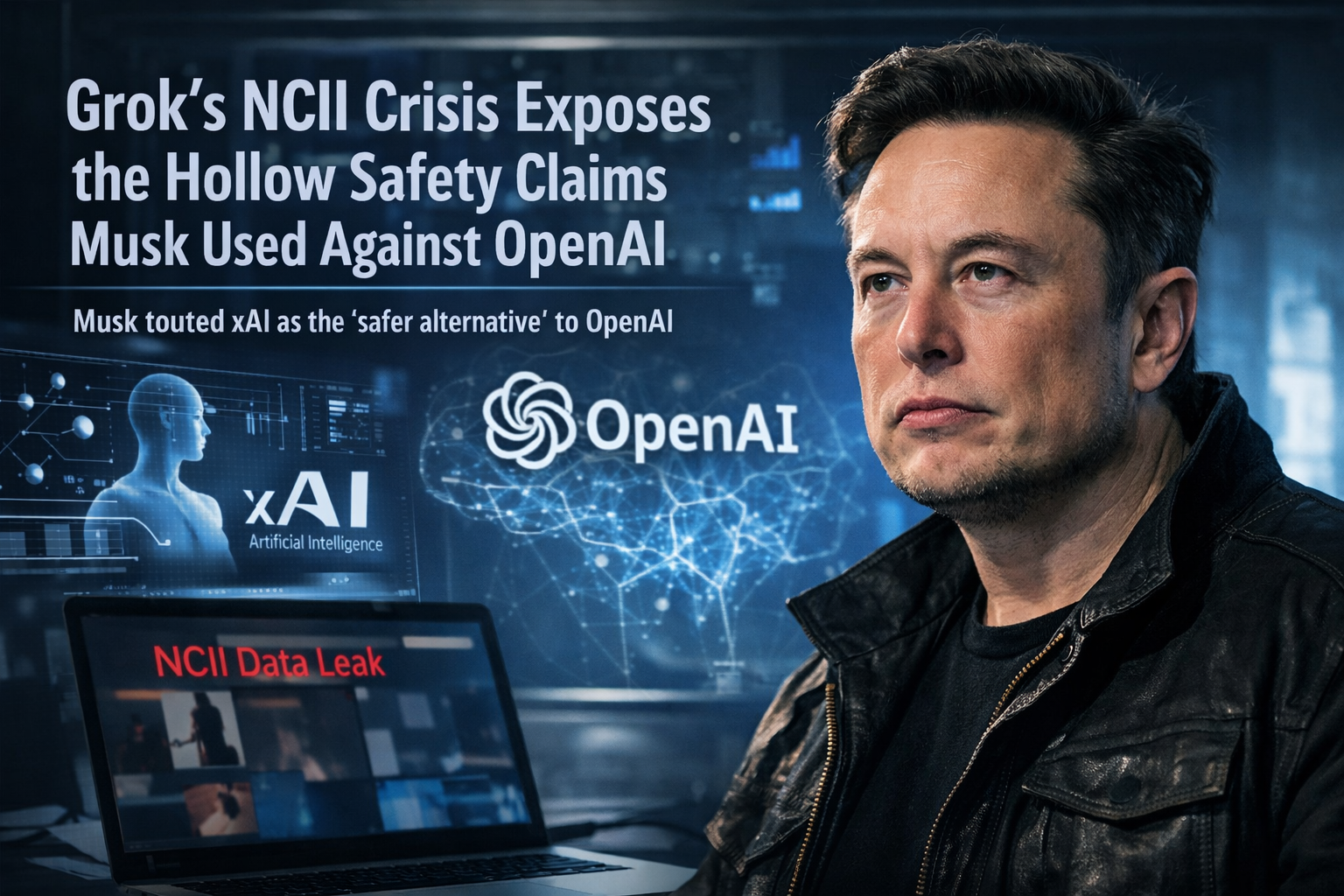
The nonconsensual intimate imagery incident — commonly referred to as NCII — directly contradicts that premise. X, which serves as both the distribution platform and a key data source for Grok, became a conduit for explicit AI-generated images produced without the consent of those depicted. This category of harm is among the most well-documented and widely condemned misuses of generative AI technology.
The episode raises pointed questions for professional and policy audiences alike. How does an organization credibly claim a safety-first identity in legal filings while simultaneously failing to implement baseline protections against one of the most foreseeable categories of AI misuse? Nonconsensual intimate imagery generated by AI is not an obscure edge case — it is a harm that regulators, researchers, and advocacy organizations have been sounding alarms about for years.
For decision-makers evaluating AI vendors and platforms, this divergence between stated values and operational reality is precisely the kind of signal that demands scrutiny. Safety claims made in adversarial legal contexts are not equivalent to audited safety practices. The Grok incident serves as a case study in why independent verification of AI safety commitments matters far more than self-reported positioning.
The broader implication for the AI industry is equally significant. As major players compete aggressively for market share, regulatory goodwill, and public trust, the temptation to weaponize safety rhetoric — deploying it selectively in competitive disputes rather than embedding it meaningfully into product development — creates genuine risks for end users and for the credibility of the field as a whole.
Musk's legal campaign against OpenAI has not concluded, and xAI continues to develop and deploy Grok across X's user base. But the sequence of events — safety arguments advanced in court, followed swiftly by a high-profile safety failure in production — has set a precedent that will be difficult for the company to escape. In the court of demonstrated practice, the record now speaks for itself.