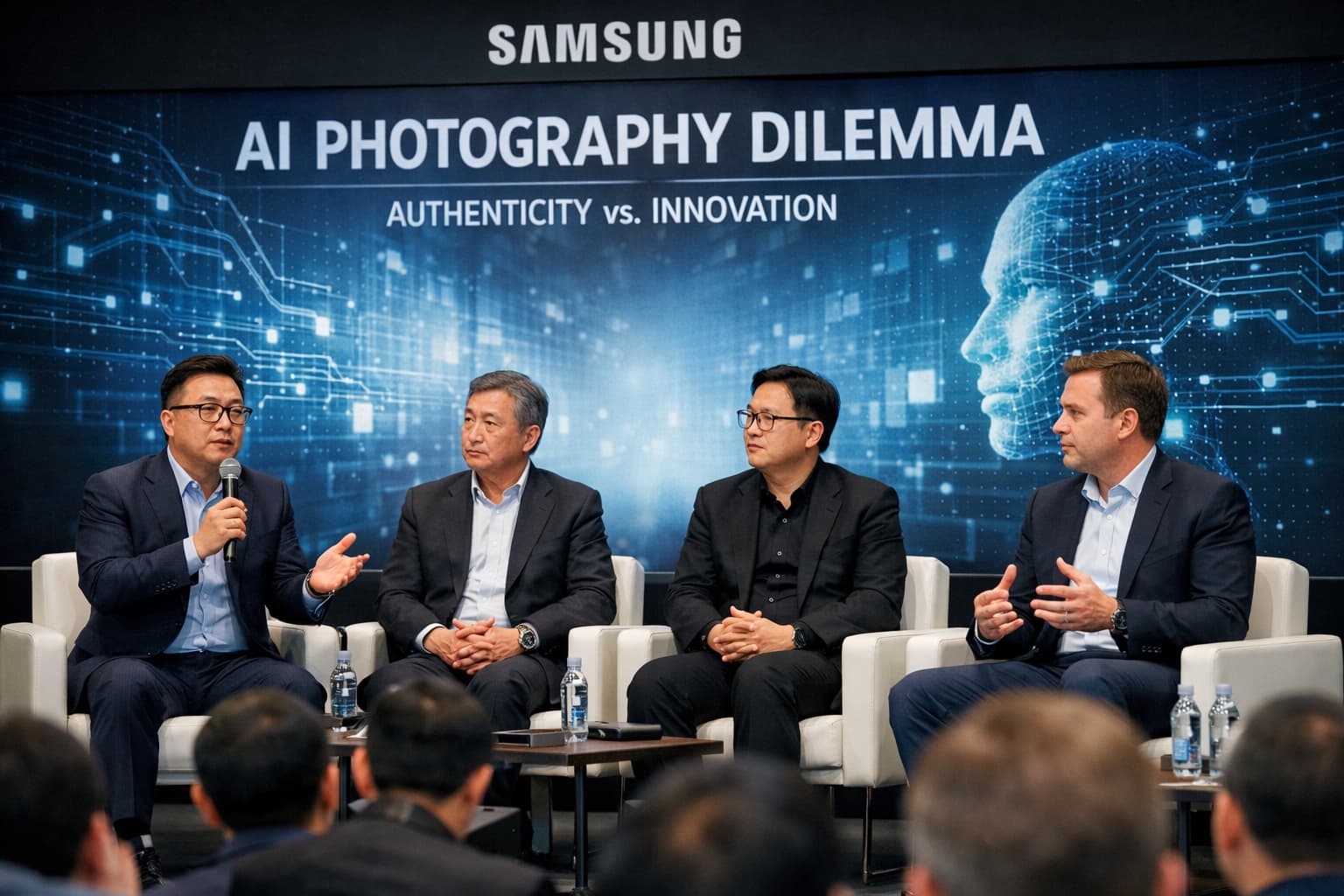
At a Thursday morning Q&A panel featuring four of Samsung's most senior smartphone executives, a fundamental tension at the heart of modern mobile photography was placed squarely on the table. The session offered a rare opportunity for direct engagement with the leadership of one of the world's most consequential camera manufacturers. The questions raised were not merely technical — they were philosophical.
Samsung's position in the global smartphone market lends significant weight to any stance the company takes on imaging technology. Until 2025, Samsung held the title of the world's largest smartphone manufacturer, and by extension, the world's largest producer of camera-equipped devices. It currently ranks as the second largest, behind Apple — a distinction that still places it at the center of conversations about how billions of people capture and share reality.
The first question put to the panel cut directly to one of the most consequential debates in consumer technology today. The question posed was:
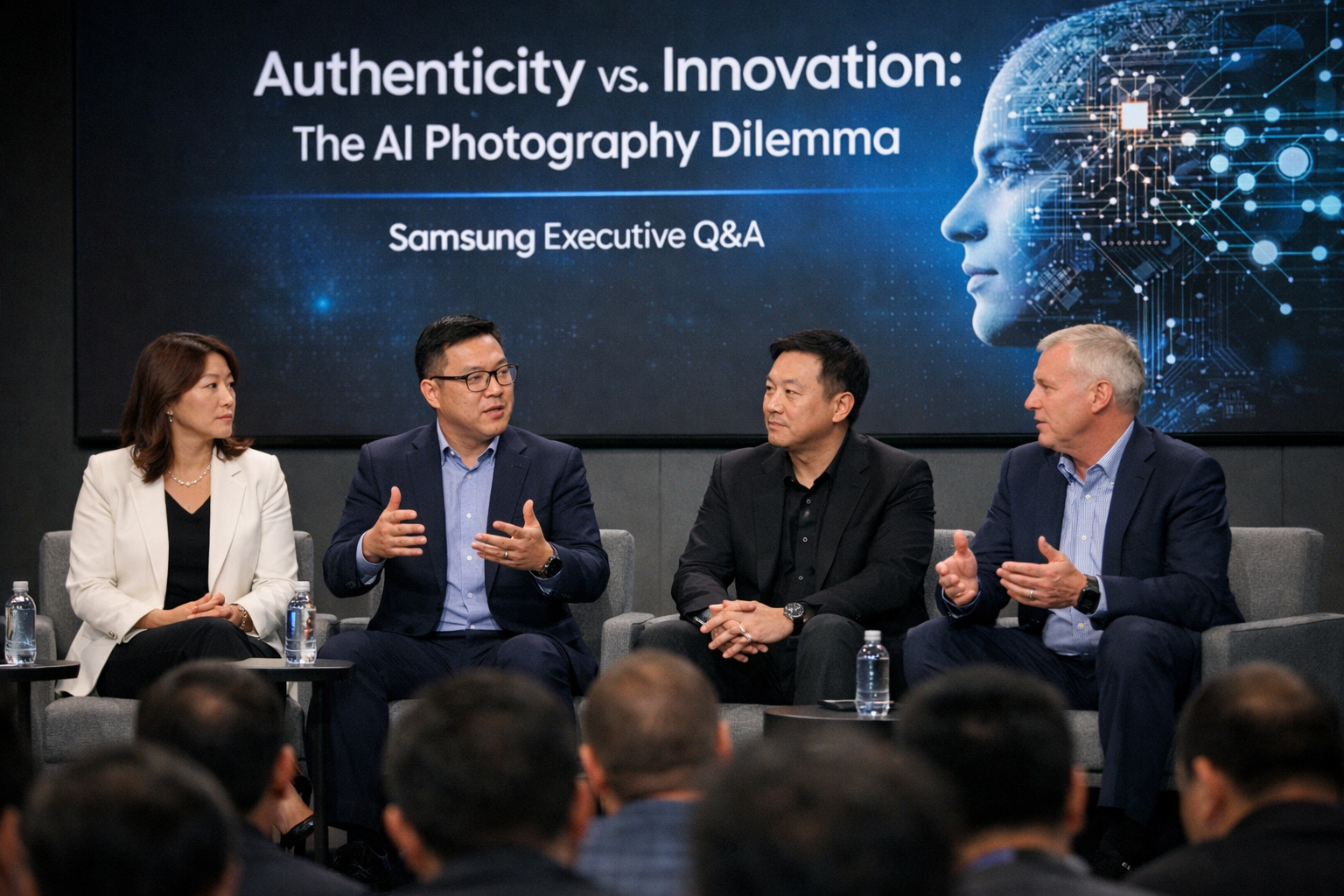
"We see a divide in society between people who want AI to do impressive things with their photos and videos, and those who don't want AI to do anything with photos and videos because it's eroding our ability to believe that what we have seen is real, destroying the concept of photographic evidence."
This framing captures a growing and deeply consequential fault line in how consumers, professionals, and institutions relate to photographic media. On one side stands the promise of AI-enhanced imagery — sharper details, corrected exposures, and generative capabilities that were unimaginable a decade ago. On the other stands a mounting concern about the integrity of the visual record and the erosion of trust in documentary evidence.
The question also raised the role of metadata tools such as C2PA — the Coalition for Content Provenance and Authenticity — as a potential mechanism for bridging that divide. C2PA and similar standards are designed to embed verifiable provenance data within image files, theoretically allowing viewers to determine whether and how AI has altered a given photograph. However, as the question implied, these tools have thus far achieved limited traction in mainstream adoption.
The full responses from Samsung's executive panel, and the broader implications of the company's strategic direction on AI-assisted photography, represent a critical marker in how the industry intends to navigate competing demands for creative capability and documentary integrity. As AI becomes increasingly embedded in the default image processing pipelines of flagship devices, the decisions made by manufacturers like Samsung will shape public expectations — and public trust — for years to come.